Primary vs Secondary School in Australia: What You Need to Know
Written by
BestSchools Team
Last updated
5 July 2026
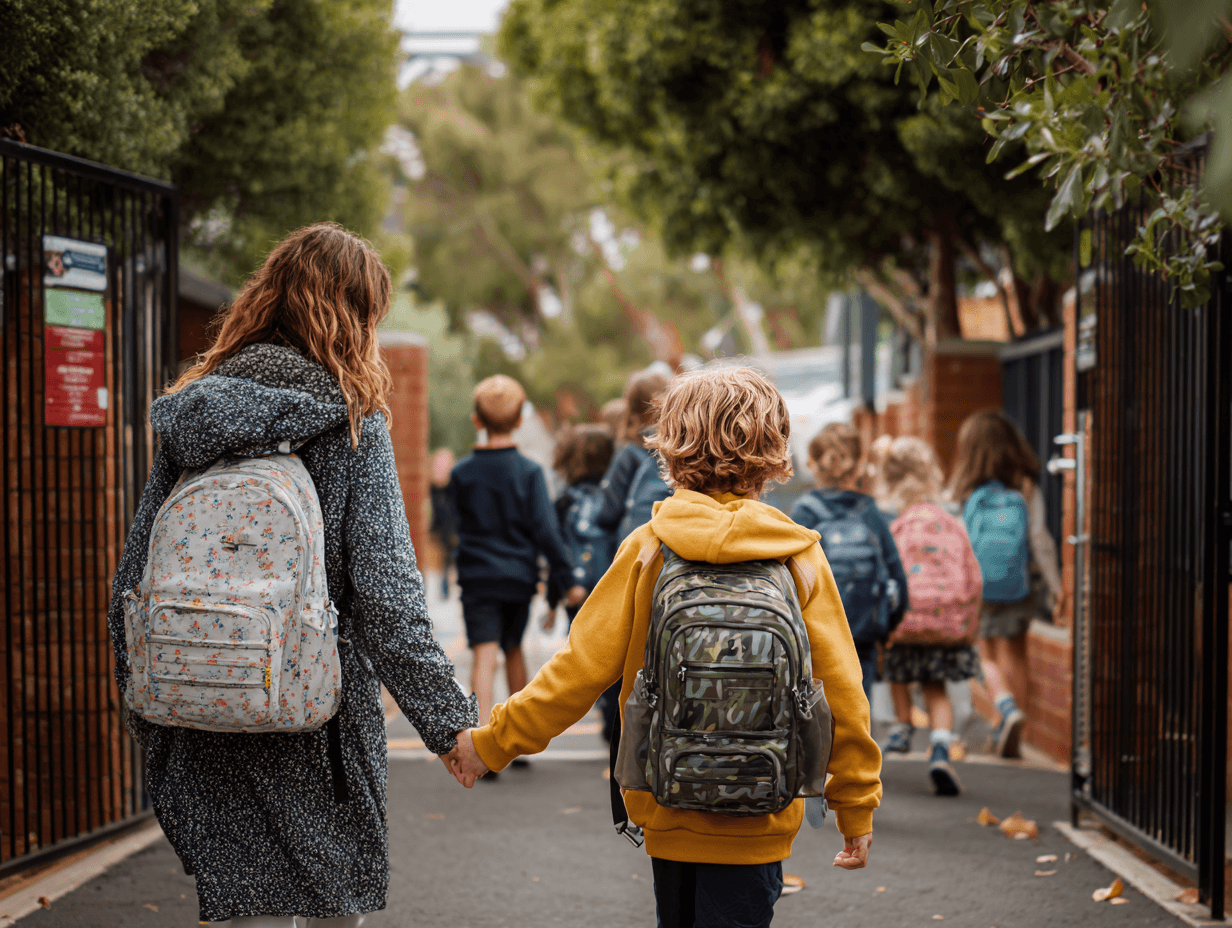
Primary vs secondary school is one of the biggest shifts Australian families navigate, even if your child stays on the same campus. Understanding how expectations, teaching approaches, and wellbeing supports change will help you make smart choices and keep your child thriving from Prep to Year 12. Use this guide alongside our Australian School System Guide, Australian School Year Levels by State, and School Levels & Ages explained to keep stage names and age expectations straight.
Primary School Snapshot
- Prep, Kindergarten, Reception or equivalent through Year 6
- Generalist classroom teachers deliver most subjects
- Focus on core literacy, numeracy and social development
- Smaller cohorts with strong home-school communication
Secondary School Snapshot
- Usually Years 7-12, though campus labels vary by system
- Subject specialists and rotating timetable
- Broader curriculum plus elective choice
- Greater emphasis on independence and future pathways
Comparison shortcut
Primary and secondary school at a glance
The transition changes teaching, timetables, friendship groups and parent communication.
Primary
Foundational literacy, numeracy, routines and close classroom-teacher relationships.
Watch-out: Upper-primary students still need independence practice before Year 7.
Secondary
Subject choice, specialist teachers, pathway planning and broader co-curricular options.
Watch-out: Organisation, workload and wellbeing support need active monitoring during transition.
Use school data next
Need a clearer shortlist?
Match schools to your family in minutes
Answer a few tailored questions and our School Choice Assessment recommends schools that fit your goals, budget and location.
Free in under 5 minutes • Personalised shortlist • No spam
Primary vs Secondary at a Glance
Key differences between Australian primary and secondary schooling
| Aspect | Primary School | Secondary School |
|---|---|---|
| Teacher structure | One main classroom teacher with some specialist sessions (PE, arts, languages) | Different teacher for each subject; homegroup or mentor for pastoral care |
| Timetable | Blocks for literacy/numeracy, flexible scheduling | Period-based timetable, often 5-6 lessons per day |
| Curriculum focus | Foundational skills, inquiry learning, building routines | Subject depth, electives, vocational pathways, senior certificates |
| Assessment | Formative assessment, portfolios, NAPLAN Years 3 & 5 | Assignments, exams, projects, NAPLAN Year 9, internal assessments for senior certificates |
| Wellbeing support | Class teacher as first responder, school counsellor optional | Year advisers, Heads of House, wellbeing teams, counsellors |
| Parent involvement | Regular communication, pick-up chats, helper roles | Formal parent-teacher nights, digital portals, student-led conferences |
| Co-curricular | Clubs run during school hours, beginner sport and arts | Expanded sport, arts, leadership, service, academic societies |
| Future focus | Readiness for secondary routines | Subject choices aligned to post-school pathways |
If you have a child in a P-12 or K-12 school, ask whether the primary and secondary campuses share transition programmes, wellbeing data and teacher collaboration time so it makes the step-up smoother.
How Teaching and Learning Shift
Primary classrooms emphasise whole-child development. Generalist teachers build close relationships, integrating literacy, numeracy, science and humanities through thematic units. Lessons are paced to suit group needs, with frequent movement breaks and hands-on activities.
Secondary learning is subject-driven. Students rotate through specialist teachers who assume higher baseline independence: homework is set in multiple subjects, digital platforms track progress, and assessments demand planning weeks in advance. Electives in Years 9-10 (e.g. design, drama, STEM, languages) expose teens to potential senior pathways like VCE sequences, HSC subjects, or VET certificates.
What this means for parents:
- Expect more detailed weekly communication from primary teachers and mid-term summaries from secondary faculties
- Help children develop study habits in late primary: time management, note-taking, using planners so the Year 7 leap feels manageable
- Encourage subject exploration in lower secondary; breadth now informs smart senior choices later
Assessment, Reporting and What "Good" Looks Like
In primary school, assessment is mostly formative: work samples, teacher observations, and standardised tools like PAT Maths or PM Benchmarks. Reports focus on achievement against curriculum standards and effort. The big external marker is NAPLAN in Years 3 and 5.
Secondary assessment layers in essays, practicals, oral presentations, group projects and exams. NAPLAN returns in Year 9, while Years 10-12 build towards state certificates such as VCE (VIC), HSC (NSW), SACE (SA), WACE (WA), QCE (QLD), TASC (TAS), ACT Senior Secondary Certificate, and NTCET (NT). These credentials combine school-based assessment with external moderation or exams.
For a state-by-state breakdown of how those certificates work – including ATAR weightings and vocational pathways – explore our State curricula and senior certificates guide.
Assessment Checkpoints
- Primary: Continuous progress monitoring + NAPLAN Years 3 & 5
- Lower Secondary: Diagnostic testing, elective subject assessments
- Senior Secondary: Internal tasks + external exams contributing to ATAR or vocational awards
Reporting Shift
- Primary reports often include teacher comments on personal development
- Secondary reports introduce subject-specific grades and study skill feedback
- Senior reports detail scaling rules and prerequisites for universities/TAFE
To stay informed, familiarise yourself with your school's reporting portal. Many secondary schools provide continuous assessment updates so you can support study plans without micromanaging.
Wellbeing and Pastoral Care Structures
Primary wellbeing centres on the classroom teacher, with support from the deputy principal or learning support team. Regular circle time, buddy systems and social skills programmes build community. Issues are usually handled quickly within the classroom.
Secondary schools create layered support networks:
- Homegroup/mentor teachers check in daily or weekly
- Year advisers or Heads of House oversee cohorts
- Counsellors, psychologists and wellbeing coordinators run targeted programmes (study skills, respectful relationships, mental health literacy)
- Peer leadership (Year 11/12 mentoring) helps younger students feel connected
Ask prospective secondary schools how they hand over primary wellbeing data, particularly if your child has learning adjustments or health plans. A smooth transition means strategies stay consistent.
The Evolving Role of Parents
Primary schooling invites frequent parent participation: reading groups, excursions, class celebrations. Communication is informal, with face-to-face chats at pick-up and Seesaw or ClassDojo updates.
Secondary schools prioritise student agency. Expect:
- Scheduled parent-teacher interviews each semester
- Online progress dashboards and email updates instead of playground conversations
- Student-led conferences where teens present goals and reflections
- Increased expectation that students advocate for themselves (emailing teachers, booking help sessions)
Stay involved by reviewing portal notifications together, attending information evenings, and keeping dialogue open about workload and friendships. It is a shift from "doing for" to "coaching beside" your young person.
Preparing for the Primary-to-Secondary Transition
Transition programmes vary widely but typically include orientation days, taster lessons, peer buddy systems and information nights. Some tips to ease the move:
- Start conversations in Year 5-6. Visit open days, read school prospectuses, and compare options with our Primary School Tour Checklist.
- Build organisation skills. Practise packing bags the night before, using a diary, and managing homework chunks. Encourage your child to email their Year 6 teacher when they have questions; this mirrors secondary expectations.
- Normalise nerves. Share stories about your own secondary beginnings, emphasising that everyone feels unsure at first.
- Connect with peers. Arrange meet-ups over the holidays so familiar faces greet Day 1. Encourage joining at least one co-curricular in Term 1.
- Coordinate logistics. Test transport routes, uniform requirements and device policies ahead of time to avoid first-week surprises.
Ask secondary schools how they track Year 7 adjustment. Many use short wellbeing surveys in Terms 1 and 2, so request to view past anonymised results to gauge responsiveness.
Supporting Secondary Success Without Hovering
Once the transition settles, focus on habits that sustain momentum:
- Routine check-ins. Schedule a weekly 10-minute "school download". Use open prompts like "What subject felt good this week?" or "Where do you need backup?"
- Study-friendly environment. Provide a quiet workspace, but encourage occasional study sessions with friends because collaboration mirrors classroom expectations.
- Monitor workload signs. Persistent late nights, skipped meals or Sunday dread signal stress. Liaise with mentors early rather than waiting for report cards.
- Encourage balance. Co-curriculars keep teens motivated. If commitments pile up, help them prioritise across terms.
- Leverage school tools. Many schools run study skills evenings or parent webinars, so attend together.
If your child needs extra guidance, explore the school's tutoring, homework club or academic coaching options. Our School Choice Assessment can also identify schools with the support structures that matter most to your family.
Keeping the Primary-to-Secondary Journey on Track
Primary vs secondary school decisions never happen in a vacuum. Revisit this guide whenever expectations shift, especially before major transitions like Year 7 or senior subject selections. By understanding how teaching, assessment and wellbeing evolve, you can advocate for support early and keep momentum strong as your child grows.
Where to go next
Turn this research into a clearer shortlist
Three practical ways to move from reading to action.
- Start the assessment
Take the School Choice Assessment
Get a personalised report based on your budget, commute, sector and learning priorities.
- Compare schools
Compare shortlisted schools
Put up to three schools side by side so trade-offs are easier to spot.
- Open schools map
Browse schools near you
Compare nearby schools by location, sector, type and fees.