
School Readiness in Australia: A Practical Guide for Parents
Written by
BestSchools Team
Last updated
25 July 2026
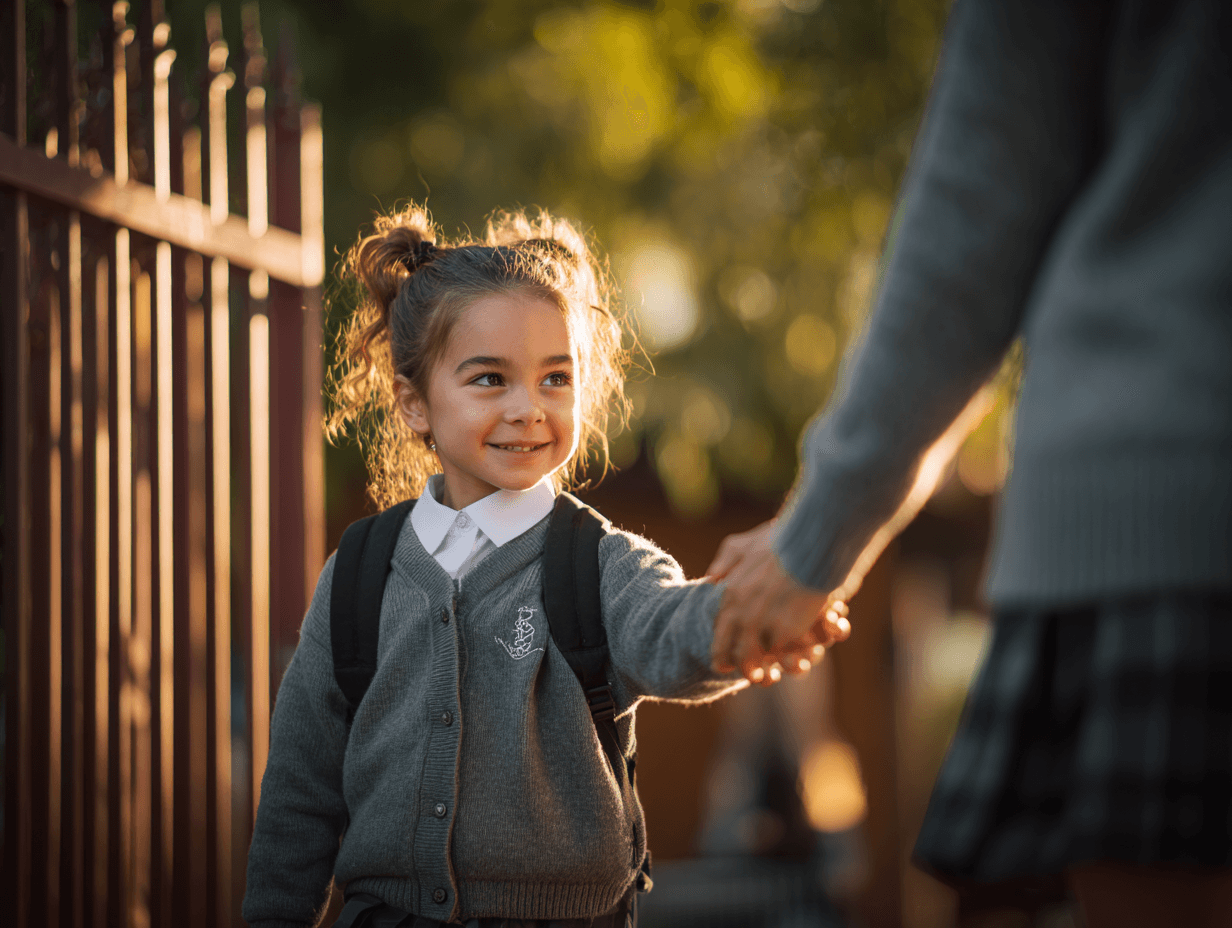
School readiness is not a test of whether your child can read, write or count. It is the whole-child ability to take part in the school day: communicating needs, joining a group, coping with change, managing everyday tasks and staying curious enough to learn.
These skills develop at different rates. A child may confidently talk with adults yet need help saying goodbye, or manage their belongings but take time to join group play. The aim is not perfection before day one. It is to notice what is already working, practise what will make the day easier and plan support with the people who know your child.
Start with the rules where you live
The first year of full-time school has different names around Australia, including Kindergarten, Prep, Foundation, Pre-primary, Reception and Transition. Starting ages, cut-off dates and enrolment options also differ between states and territories.
Check the current rule with your education authority and prospective school rather than relying on another family's experience. Our guides to Australian school year levels by state and school levels and ages in Australia can help you find the right starting point.
Preschool supports children's learning before full-time school, but arrangements vary. The Australian Government's preschool overview, opens in a new tab explains the national context and points families towards state and territory information.
What school readiness looks like in everyday life
Rather than using a pass-or-fail checklist, look for developing skills across several areas and ask what support would help next.
Communication and understanding
A child might show growing readiness when they can communicate a need, understand a familiar instruction or tell an adult when something is wrong. Clear speech is not the only form of communication, and children who use another language or a communication aid should be understood in that context.
Helpful practice includes chatting about the day, asking open questions during shared reading and encouraging your child to ask for help. Tell the school how your child communicates best.
Social and emotional skills
School involves being alongside many other children, waiting, taking turns and recovering when things do not go to plan. Developing readiness may look like joining play with support, noticing another person's feelings or using a familiar strategy to calm down.
Big feelings about starting school are normal. A child does not need to separate without emotion; a predictable goodbye and a trusted adult who knows how to help are more useful goals.
Independence and self-care
Everyday independence helps a child participate with less frustration. Notice how they go with toileting, handwashing, eating from their lunchbox, putting on a hat, carrying a bag and keeping track of belongings.
Support is allowed. Practise one small part of a routine at a time and tell the school about any task where your child will need assistance or an adjustment.
Learning behaviours and curiosity
Children learn through play, conversation, movement and exploration. Useful foundations include trying an unfamiliar activity, returning to a task after help, listening during a short shared experience and showing curiosity.
These behaviours will vary with the activity, environment, time of day and child's interests. They should not be reduced to a rigid requirement to sit still or complete academic work for a set period.
Physical wellbeing and participation
The school day asks children to move around a campus, use play and classroom materials, eat, rest and manage their energy. Think about what helps your child participate safely and comfortably, including sleep, movement, hearing, vision, medical needs and sensory preferences.
Schools can plan for health conditions, disability and additional needs. Readiness should never mean a child has to hide a need or manage without reasonable support.
A note about the AEDC domains
The Australian Early Development Census (AEDC) reports on five domains: physical health and wellbeing, social competence, emotional maturity, language and cognitive skills, and communication skills and general knowledge.
These domains can help adults think broadly about children's development, but the AEDC is not an individual school-readiness test or checklist. It is a population-level census completed by teachers after children have started their first year of full-time school. The AEDC explanation of the domains, opens in a new tab describes how the information is used to understand groups of children and communities.
Reflect on everyday readiness
Build a practical starting-school plan
Answer 20 questions about independence, social-emotional development, language, learning behaviours and health preparation. It takes about five minutes and provides a practical roadmap for your next conversations.
Free • Informational, not a diagnosis
A practical plan for the weeks before school
You do not need to recreate a classroom at home. Ordinary routines offer plenty of useful practice.
- Make routines predictable. Use a simple morning sequence and let your child complete the parts they can. Practise packing a bag together, but avoid expecting them to remember everything alone.
- Build self-help through small choices. Let your child open common lunch containers, put on shoes or choose between two suitable outfits. Step in before frustration takes over.
- Practise communication. Role-play asking to use the toilet, saying they do not understand, telling an adult they are hurt and introducing themselves to another child.
- Use play for flexible thinking. Take turns, change a rule together, build something that falls down and talk through what to try next. These are learning experiences, not performance tests.
- Read and talk together. Enjoy stories, notice pictures, predict what might happen and let your child retell favourite parts. Schools teach formal reading and writing; shared enjoyment is a valuable foundation.
- Prepare health and comfort needs. Check that the school has current medical information and talk about hearing, vision, sleep, toileting, food, sensory or mobility needs early enough to plan support.
- Rehearse the journey and goodbye. Visit the outside of the school if appropriate, practise the route and decide on a short goodbye routine. Explain who will collect your child and what will happen after school.
The StartingBlocks transition-to-school guide, opens in a new tab also suggests sharing information between families, early childhood services and schools so that children experience a more connected transition.
If your child is near the age cut-off
A birthday close to the cut-off can make the decision feel urgent, but a generic online checklist cannot decide the best timing for an individual child. Use a structured conversation instead:
- Confirm eligibility and options. Check the latest state or territory rule and ask the school how it applies to your child's date of birth.
- Ask what educators see across settings. Discuss how your child communicates, joins groups, manages routines, responds to change and seeks help at their early childhood service and at home.
- Ask the school about transition support. Orientation, buddy activities, gradual familiarisation and adjustments may change what a successful start can look like.
- Consider the whole family context. Your child's relationships, health, prior early learning experiences, care arrangements and family circumstances all matter.
- Bring in relevant professional advice. If a developmental, health or additional-needs question is affecting the decision, discuss it with a qualified professional who knows your child.
No single trait, score or opinion should carry the entire decision. Record your questions and the support each option would involve, then compare them calmly.
Questions to ask the school
The school's approach matters as much as the skills a child brings. Ask:
- What orientation or transition activities can my child attend?
- Who helps children settle at arrival, and how are families updated during the first weeks?
- How do teachers support children who are still developing toileting, eating, dressing or organisation skills?
- How should we share medical, disability, sensory, communication or learning needs?
- What adjustments and specialist support are available, and when should planning begin?
- What happens if a child finds separation, group activities, playgrounds or routines difficult?
- How can our early childhood educator share useful transition information with the school?
The answers can reveal whether the school treats readiness as a shared transition responsibility rather than a hurdle for children to clear alone.
When to ask for more support
Speak with your child's early childhood educator and prospective school if you are worried or notice that an everyday task causes ongoing distress. They can share observations, explain what the school environment involves and help plan practical support.
For concerns about development, health, hearing, vision, movement, communication or behaviour, consider talking with your GP, child health nurse or another relevant qualified professional. Seeking help early is not a label and does not mean your child has failed a readiness test. It gives the adults around your child more time to understand and support them.
Use the assessment as a conversation starter
The free School Readiness Assessment asks 20 questions and takes about five minutes. It reflects on everyday skills across independence, social-emotional development, language, learning behaviours and health preparation, then provides a readiness result and practical roadmap.
The result is informational, not a diagnosis or a definitive verdict about when your child should start school. Use it to organise what you have noticed and prepare questions for your educator, school or health professional.
Official sources
- StartingBlocks: Transition to school, opens in a new tab — practical guidance from ACECQA for families moving from early childhood education and care to school.
- Australian Early Development Census: About the domains, opens in a new tab — what the five AEDC domains measure and how population-level results are used.
- Australian Government Department of Education: Preschool, opens in a new tab — the national preschool context and links to state and territory information.
A confident start does not require a perfect checklist. It comes from knowing your child, practising useful routines and working with educators and professionals so the right support is ready from day one.
Frequently Asked Questions
Where to go next
Turn this research into a clearer shortlist
Three practical ways to move from reading to action.
- Check readiness
Check school readiness
Understand strengths, gaps and next steps before starting school.
- View routine checklist
Build calmer routines
Use a practical checklist for smoother mornings and transitions.
- Open schools map
Browse schools near you
Compare nearby schools by location, sector, type and fees.