Public vs Private Schools in Australia: 2026 Comparison Guide
Written by
BestSchools Team
Last updated
5 July 2026
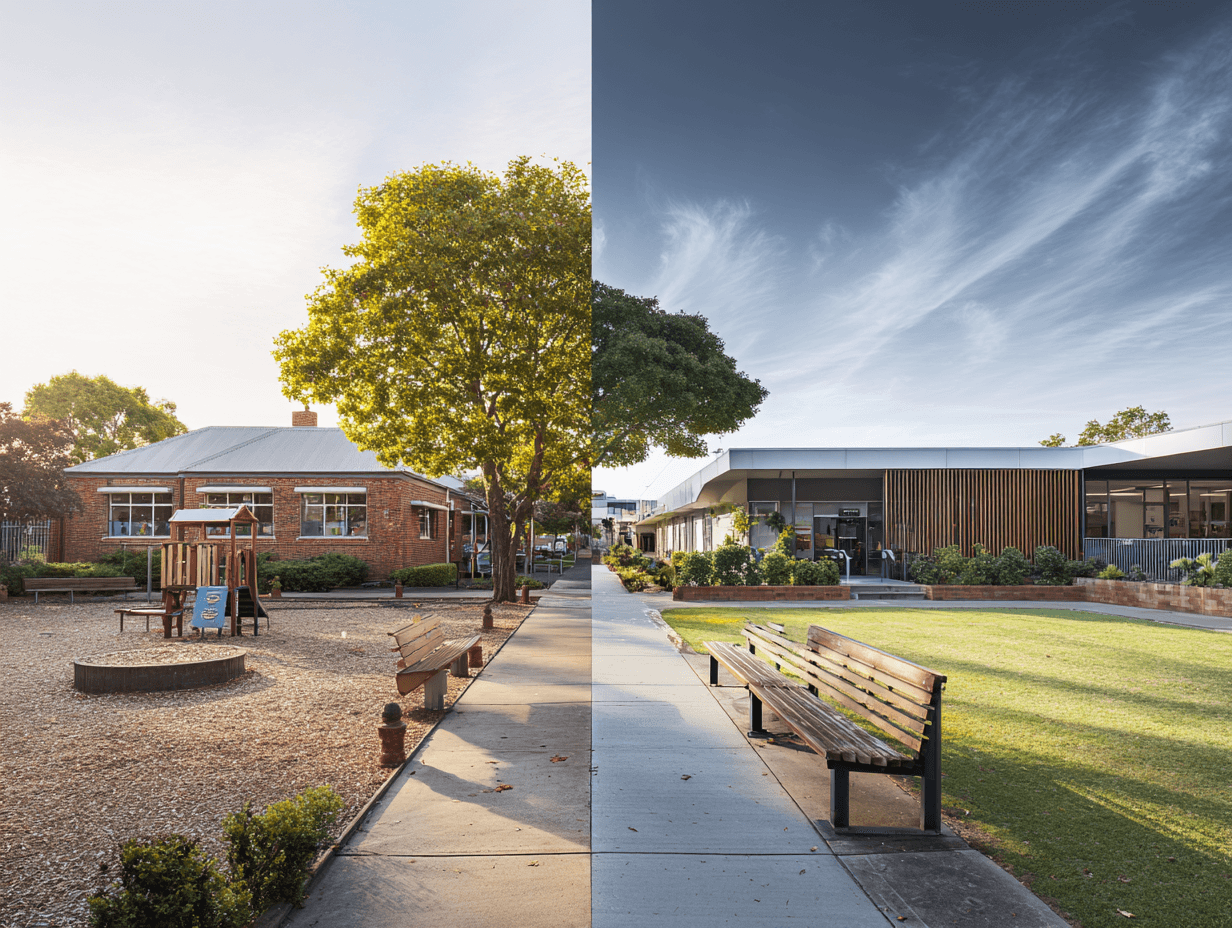
Choosing between public and private schools in Australia is rarely a simple question of “free versus expensive” or “better versus worse”. The real comparison is between the schools your family can actually access: your local government school, any selective or specialist government options, nearby Catholic schools, and independent schools within budget and travel range.
Officially, Australia is usually described as having government and non-government schools. Non-government schools are then grouped into Catholic and independent sectors. In everyday parent conversations, Catholic and independent schools are often bundled together as “private schools” because they are not government-run and usually charge tuition or school fees. This guide uses that parent-friendly language, while calling out the official sector differences where they matter.
Government schools also include selective, specialist and academically selective public schools. That distinction is important: a selective government school can look very different from a local comprehensive government school, even though both are public.
2026 quick answer
- Government schools are publicly operated, usually enrol by local intake area, and do not charge tuition for Australian citizens and permanent residents.
- Selective government schools are public schools with competitive entry. They can offer strong academic peer groups without private tuition fees, but entry is limited.
- Catholic schools are non-government schools. Many are lower-fee than independent schools, combine curriculum with a Catholic ethos, and often give priority based on parish, sibling or faith links.
- Independent schools are non-government schools with their own boards, fee schedules, enrolment processes and educational philosophies.
- No sector guarantees fit. Outcomes are shaped by intake, teaching quality, student wellbeing, family resources, location, peer group and whether the school suits your child.
According to the Australian Bureau of Statistics' 2025 schools release, Australia had 4,160,918 students across 9,673 schools. The majority were in government schools (62.8%), followed by Catholic schools (20.0%) and independent schools (17.2%).
At a glance comparison
Public and private school pathways in Australia
| Pathway | How it usually works | Where it can be strongest | Watch-outs |
|---|---|---|---|
| Government school | State or territory-run public school, usually based on local intake area | Local community, low tuition cost, broad access, diverse peer group | Resources and subject choice can vary by school size, location and staffing |
| Selective government school | Public school with academic or specialist entry criteria | Strong academic peer group without private tuition | Highly competitive entry; may require testing, travel or preparation |
| Catholic school | Non-government school, often systemic, usually fee-charging | Values-based education, pastoral care, lower fees than many independent schools | Faith expectations, enrolment priorities and extra levies vary |
| Independent school | Non-government school with independent governance | Facilities, co-curricular depth, specialist programs, smaller classes | High total cost, selective admissions, pressure or culture may not suit every child |
Comparison shortcut
Public, Catholic and independent at a glance
Use this as a quick screen before you compare actual schools in your area.
Government
Local access, low tuition and strong community links.
Watch-out: Catchment rules, subject breadth and support staffing vary by school.
Catholic
Values-based education with moderate fees and pastoral care.
Watch-out: Faith expectations, enrolment priority and extra levies differ by system.
Independent
Specialist programmes, facilities, co-curricular breadth and distinctive philosophies.
Watch-out: Total cost, travel time and culture fit need close checking.
Use school data next
Cost comparison: look beyond tuition
Public schools are generally tuition-free for Australian citizens and permanent residents, but they are not cost-free. Families still need to budget for uniforms, devices, excursions, voluntary contributions, camps and transport.
Private school costs vary much more. Catholic systemic schools are often lower-fee, while independent school fees can range from modest community-based schools to high-fee metropolitan schools above $40,000 per year.
Indicative annual family costs to check before choosing
| Cost item | Government | Catholic | Independent |
|---|---|---|---|
| Tuition | $0 for most local students | Often a few thousand dollars to low five figures | Often mid-four figures to $40,000+ at high-fee schools |
| Voluntary contributions / levies | $100-$800+ depending on school | Technology, building or family levies are common | Technology, building, capital or activity levies may apply |
| Uniform setup | $200-$700 | $400-$1,000 | $600-$1,500+ |
| Devices, books and resources | $150-$800 | $300-$1,000 | $500-$1,500+ |
| Camps, sport and co-curricular | Usually lower but varies | Moderate and varies by year level | Can be substantial, especially for sport, music, tours or outdoor education |
| Fee relief | Equity programs may apply | Sibling discounts, parish support or bursaries may apply | Scholarships, bursaries or payment plans may apply |
If fees are part of the decision, do not compare tuition alone. Ask for the full fee schedule, compulsory levies, device policy, transport costs and what happens in senior years. For private options, our Scholarship Eligibility Assessment can help you think through bursaries, scholarships and fee-relief pathways before you rule a school in or out.
Comparing private school costs?
Check scholarship and fee-relief options
Use the Scholarship Eligibility Assessment to identify the kinds of bursaries, discounts and scholarships worth asking schools about.
Free in under 5 minutes • Personalised shortlist • No spam
Academic results: what the data can and cannot tell you
Sector averages can be misleading. Private schools often appear stronger on raw academic results, but those results can reflect selective entry, family income, prior achievement, tutoring, language background and socio-educational advantage. Selective government schools can also outperform many fee-paying schools because they enrol academically selected students.
A better question is not “is private better than public?” It is:
- Is this school strong for students like my child?
- Does it offer the subjects, extension, learning support and senior pathways we need?
- Are results strong after considering the school's intake and local context?
- Does the culture support learning without creating unhealthy pressure?
Use school performance and results and understanding school rankings alongside individual school profiles. Rankings can start the conversation, but they should not finish it.
Teaching, class sizes and learning support
All Australian schools must meet registration requirements, employ appropriately qualified teachers, and deliver the Australian Curriculum or the relevant state and territory curriculum framework. The difference parents feel day to day usually comes from resourcing, staffing, leadership and school culture.
Government schools often provide broad, inclusive education with access to departmental supports and local community networks. Larger schools may offer strong subject breadth, while smaller schools can feel personal but have fewer specialist subjects.
Selective and specialist government schools may offer accelerated learning, high-achieving peer groups, arts/sport programs or specialist STEM pathways, while remaining part of the public system.
Catholic schools typically combine curriculum with faith formation, pastoral care and community expectations. Many offer lower fees than independent schools and can be a practical middle ground for families seeking values-based schooling.
Independent schools may have smaller classes, specialist teachers, broader co-curricular programs, dedicated learning-support teams or alternative curriculum options such as IB, Montessori, Steiner or Cambridge pathways.
For children who need extra support or extension, ask specific questions: who writes learning plans, how often support is reviewed, what extension looks like beyond worksheets, and how the school tracks wellbeing.
Culture, wellbeing and belonging
Culture is where sector stereotypes break down fastest. A local public school can have exceptional wellbeing practices. A high-fee private school can still be the wrong fit. A Catholic school may feel deeply values-aligned for one family and too faith-centred for another.
When visiting schools, pay attention to:
- how staff speak to students in ordinary moments
- whether students seem known by name
- how behaviour issues are handled
- how the school communicates with parents
- what support exists for anxious, gifted, neurodivergent or socially vulnerable students
- whether sport, music, leadership and service opportunities are realistic for your child
If wellbeing is central to the decision, pair this article with Student Wellbeing and Safety and Pastoral Care and Student Support.
Access and enrolment rules
The enrolment pathway can be as important as the school type.
- Government schools usually prioritise students living inside the local intake area or catchment. Out-of-area enrolment may be limited.
- Selective government schools use entrance tests, auditions or specialist selection processes. They are public, but not open-entry.
- Catholic schools may prioritise Catholic families, parish links, siblings or feeder primary schools, though many accept students from a range of backgrounds.
- Independent schools set their own application timelines, interviews, testing, waitlists and deposit requirements.
Use School Zones and Catchments before assuming your local public option is guaranteed, and check Open Days early if you are comparing Catholic or independent schools.
Questions to ask before choosing
Use tours, open days and enrolment calls to compare what each school will actually feel like for your child. The best questions are specific enough that a school has to explain its day-to-day practice, not just repeat its brochure.
School tour questions for comparing government, Catholic and independent options
| Decision area | Questions to ask | Why it matters |
|---|---|---|
| Access and enrolment | Am I inside the local intake area? Are out-of-area, sibling, parish, faith, test or interview rules relevant? | A school can look ideal but still be hard to access if the enrolment pathway is tight. |
| Total cost | What are the compulsory fees, levies, uniforms, devices, camps, transport costs and senior-year extras? | The real family cost is rarely captured by tuition alone. |
| Learning support | Who writes support plans, how often are they reviewed, and what help is available in class? | Support quality varies by school, not just sector. |
| Academic extension | How are high-achieving students stretched beyond worksheets or extra homework? | Selective, government, Catholic and independent schools can all handle extension differently. |
| Wellbeing and behaviour | How does the school respond to bullying, anxiety, school refusal and repeated behaviour issues? | Policies matter less than the response students actually experience. |
| Daily fit | What does a typical week look like for homework, sport, music, faith activities, travel and co-curricular expectations? | A strong school can still be the wrong fit if the rhythm does not suit your child or family. |
Before making a decision, ask each realistic school for the same information and write the answers down in one place. That makes it easier to compare a local government school, a Catholic school and an independent school on fit, cost and logistics instead of reputation alone.
How to compare real schools, not sectors
Once you have a shortlist, compare the actual schools side by side:
- Search nearby options with the schools map.
- Save likely schools and compare them in Compare Schools.
- Read related guides such as Government vs Catholic vs Independent Schools, Catholic Schools Explained and School Funding and Resources.
- Use the School Choice Assessment if you want a structured recommendation path.
- Visit at least one school from each realistic sector so you are comparing lived impressions, not reputation alone.
Need a clearer shortlist?
Compare public and private schools side by side
Put real government, Catholic and independent schools next to each other so fees, commute, support and culture are easier to judge.
Free in under 5 minutes • Personalised shortlist • No spam
Bottom line
Public and private education can both be excellent in Australia. The strongest choice is the school that fits your child's learning needs, wellbeing, commute, family values and budget.
Government schools offer broad access and can include high-performing selective or specialist pathways. Catholic and independent schools sit in the non-government sector and are often called private schools in everyday language, but they differ in governance, fees, ethos and admissions. The smartest move is to compare individual schools in context, then use tours, data and your child's needs to make the final call.
Frequently Asked Questions
Where to go next
Turn this research into a clearer shortlist
Three practical ways to move from reading to action.
- Compare schools
Compare public and private schools side by side
Line up real schools so sector differences become specific to commute, fees, support and culture.
- Open schools map
Browse schools near you
Compare nearby schools by location, sector, type and fees.
- Check eligibility
Check scholarship eligibility
Answer a few quick questions to see which scholarship pathways may be worth exploring.